

Experiences of grief and loss are ever present, especially in our Aboriginal and Torres Strait Islander communities. Whilst our communities are strong and resilient, there are ongoing experiences of grief over the impacts of colonisation, the Stolen Generations and their intergenerational impacts, and over the massacres and brutal treatment of the ancestors through invasion and colonisation. There are also ongoing experiences of loss of our loved ones, with many community members passing on too early or just coming to the ends of their lives.
WellMob has a wealth of culturally relevant resources developed by mob for mob. Check out the Grief and Loss tab which currently houses 20 practical resources to use with Aboriginal and Torres Strait Islander clients. Let’s have a look at the most recent ones.
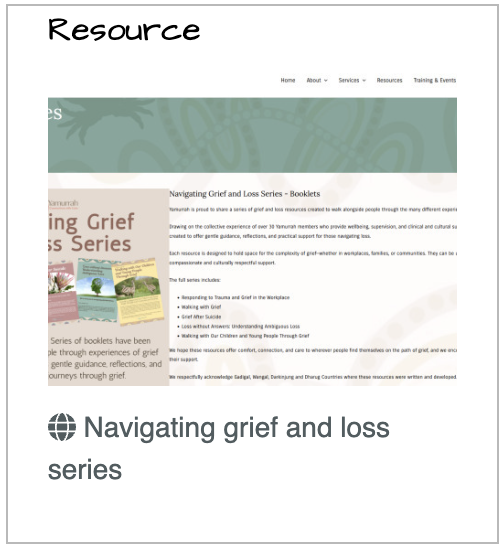
Yamurrah has recently published a series of resources “created to walk alongside people through their experiences of grief and loss”. For instance, the booklet on Grief after suicide explains what people may be experiencing and how that might be layered with numerous other losses. It explains what to expect in the months after losing a loved one, and what you can do to care for oneself. There is also a section on how to support someone bereaved by suicide and when and how to reach out for extra support.
This series by Yamurrah includes resource booklets on understanding ambiguous loss (loss without answers), responding to trauma and grief in the workplace, and walking with children and young people in grief.

A Journey into Sorry Business, by the Albury Wodonga Aboriginal Health Services is another practical resource for clients and practitioners, explaining what is meant by Sorry Business. It includes useful information about how palliative care services help, planning ahead, making decisions about health and money and medical treatment, making a will, Advanced Care planning and Enduring Guardianship. It also lists many services that may be useful and how to contact them.
What might be one of the lesser acknowledged griefs is stillbirth, and there is a beautiful booklet addressing how to support families experiencing this kind of grief:
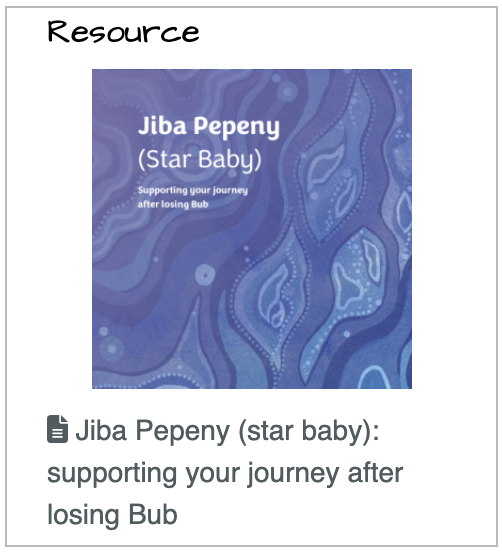
Jiba Pepeny – Star baby: supporting your journey after losing bub uses the terms “bub born sleeping’ or ‘passed away’ to describe stillbirth. It describes six ‘Stories’ or stages of the journey and gives suggestions on how to prepare for and manage each stage: hearing the news about Bub, preparing for the birth of Bub, when Bub is born, honouring Bub, going home without Bub and in the months after.
There is also a resource that explains the role of the coroner in every Australian State and Territory after a suicide death:

While these resources are practical and supportive, it can also be helpful to pause and reflect on our own practice, experiences, and understandings of grief and loss. Here are some reflective questions you might like to consider as you read and use these resources:
- In what ways do I acknowledge both personal grief (losing loved ones) and collective grief (impacts of colonisation, Stolen Generations, and intergenerational trauma) in my work?
- What opportunities do I have to integrate these into my work with clients, families, or community?
- How can I use digital resources to gently support clients experiencing grief and loss?

For health professionals, there is the Palliative care toolkit for Aboriginal and Torres Strait Islander health professionals.
It’s very relevant for non-Aboriginal health workers in that it offers learning modules on how to talk about end-of-life, palliative care, managing symptoms, loss and grief, and looking after yourself. Embedded in the toolkit are videos and links to other useful resources on these topics.
While healing from grief and loss is important, it is only one component. It’s important to care for clients holistically by exploring all aspects of their Social and Emotional Wellbeing. Check out our other resources on WellMob to support this broader approach. Get familiar with those that suit your role and community. Check out our Resource Sheets for Workers that make it easy for to find resources grouped under common wellbeing and learning topics.
About the author