

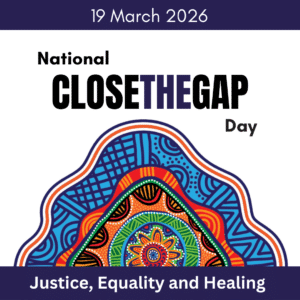
Australia, as a developed nation, has one of the world’s highest life expectancy rates, but this isn’t the same for Aboriginal and Torres Strait Islander People who face an 8-year life expectancy gap largely due to the ongoing impacts of colonisation resulting in continuing inequities in health, education and other social determinants.
Closing the Gap is the national framework designed to shift this landscape and support stronger, healthier futures for First Nations communities.
How it started
In 2005 Professor Tom Calma AO called for health equality within a generation and that led to the launch of the Closing the Gap strategy in 2008. Early progress to actually ‘Closing this Gap’ was slow because of what we all know now solutions designed for communities were not the same as solutions designed with them.
What had to change
In 2020, governments and the Coalition of Peaks—representing more than 80 Aboriginal and Torres Strait Islander community-controlled organisations—co-designed a new National Agreement on Closing the Gap. It set 19 targets across the social determinants of health and argued that those outcomes improve when First Nations peoples lead decision-making about their own lives and communities.
How it’s going
Although there have been some small improvements among 11 of the 19 targets, there are only five that are on track. We have seen positive improvements in the generation that was born when this was launched in 2008 through an increase in healthy birth weights and Year 12 completion rates, however, the suicide and adult incarceration rates remain alarmingly high and are increasing. This highlights the continuing need for trauma-aware and informed practice, cultural safety, and long-term collaboration with Aboriginal and Torres Strait Islander communities.
Why this matters for our workforce
Working in mental health and the social/community services sector, we see the impacts of colonisation on Aboriginal and Torres Strait Islander peoples and communities every day. We see the gaps that need closing and support people through that journey. However, more must be done towards Closing the Gap. Social and emotional wellbeing, and trauma-informed models of care will make a significant contribution, as will culturally led healing practices, respectful partnerships, recognition of community knowledge and shared decision making.
About the author